Here is the scenario:
Your phone rings and it is the local newspaper looking for more information on a new product just launched by your company. 20 minutes later after you have hung up the phone you realize you forgot to mention the name of the new product and (gasp) forgot the name of the newspaper that called you. Whoops.
Preparing for your interview can take very little time, but those 30 seconds of preparation will make the difference in the delivery of your key message to the media.
How do you prepare for a media interview?
Here are a few tips and tricks from a Media Coach.
1) Who are you talking to?
Before starting an interview, be sure to get the name of the interviewer and who they are working for. If the person is calling from another city, get their location. Write down the information and keep it in front of you so you don't accidentally thank the wrong person, the wrong media outlet or say the wrong city. Very embarrassing.
2) The clock is ticking
Media outlets are always on a tight deadline. Therefore it is important to show up on time for a scheduled interview, or if they give you 3 minutes to explain your product you should stick to the time allotted. It is always a great idea to ask the interviewer ahead of time how much time they will give you. Respect their time and it will go a long way in ensuring a return visit from the media the next time.
3) Know what you are talking about
What is the product you have just introduced and how will it effect the lives of the consumers? The most effective presentations will avoid technical words or phrases that are not familiar to the general public. Stick to the facts and use real words that people will remember.
4) Speak in short sentences
Media outlets are always looking for the most effective sound byte that best describes the story or situation. In most cases it is a bold statement that is shorter than 15 seconds. Prepare your presentation using short responses - each providing valuable information and promotion about your product.
5) Show off your product
It seems obvious, but if you have just launched a brand new product you had better show it off to the media. You would be surprised how many people forget to put their new product in the spotlight. This could be the unveiling of a new logo, new vehicle, new staff member, etc. Show them off to the media.
6) Big finish
Remembering that you only have 15 seconds or less to make an impact, how will consumers find more information about you? This is where you have to decide to give your phone number, email address or web address. Pick the strongest ONE and stick with ONE. If you are crafty, you will find ways to include mentions of your website, blog, or social media sites within the body of the interview.
If you can master these techniques you will become much more effective in the delivery of your message to the media.
-Darren
Get Media Coaching trips emailed directly to you. Sign up to my FREE email newsletter.

Showing posts with label media training. Show all posts
Showing posts with label media training. Show all posts
Thursday, May 6, 2010


Tuesday, April 27, 2010
Media Releases: What Not To Say
Can I tell you a secret?
Never use those words to someone in the media.
As a Media Coach and Consultant, I am often called to assist companies connect with the media and offer coaching and training for a major media event.
While there are many things you should tell the media with either a well written media release or media conference, there are numerous words and phrases that you should not say to the media.
There are so many stories I could tell you (and bore you) about my 25 years in the Media, so I called upon a good friend who has spent even more time in the Broadcast News business.

George Gordon is a Media pro who has spent a lifetime writing, editing and reading News stories. He is currently the owner of Be Heard Communications and the author of "What's Your Story.
I asked George several questions about effective communication with the media.
Question: What should never be said to the media or included in a media release...but still do?
George Gordon: 'No Comment' is the absolute worst and most common thing people say, even if it's not a bad thing they are calling about. You could be missing the opportunity to be "the authority", "expert" or "go-to person".
Stay away from giant words and inside talk or phrases that will make the reader or listener feel left our. And avoid attacks on competitors or antagonists. Speak your trust and it will set you free or at least make you look like a high road rider.
Question: What are the must-haves in an effective media release?
George Gordon: Use power words like 'you' and 'your' when talking about a subject. Use absolute statements, not waffling phrases. Example:
Wrong = "the situation is not so good".
Correct = "It's a BAD situation".
Question: How much does the News Media rely on social media for tips and updates?
George Gordon: Too much and not enough. Those who ignore social media do so at their own peril. One Twitter posting on something going on may not mean a lot but several tweets means you've just been given the heads-up on something going on. Like all tips, they need to be followed up, confirmed and verified.
Question: Do you see News Media and Social Media as competitors or allies?
George Gordon: Ally. Any medium that delivers a message needs to be used. Twitter, Facebook and MySpace should be used carefully as a tool to draw listeners, viewers and readers to your main platform. Using twitter to throw out a teaser about a big story is like throwing out the hook and drawing people to your net before anyone else can get them. Example: "Cop arrested for selling drugs, caught on film. The exclusive story coming up at 10". Today's reality; every medium has a web page with alert functions and the ability to upload video and audio on to a site from their own people or from the people on social media using new wireless devices.
-Darren
Receive my FREE email newsletter with more Media tips and tricks.
Never use those words to someone in the media.
As a Media Coach and Consultant, I am often called to assist companies connect with the media and offer coaching and training for a major media event.
While there are many things you should tell the media with either a well written media release or media conference, there are numerous words and phrases that you should not say to the media.
There are so many stories I could tell you (and bore you) about my 25 years in the Media, so I called upon a good friend who has spent even more time in the Broadcast News business.

George Gordon is a Media pro who has spent a lifetime writing, editing and reading News stories. He is currently the owner of Be Heard Communications and the author of "What's Your Story.
I asked George several questions about effective communication with the media.
Question: What should never be said to the media or included in a media release...but still do?
George Gordon: 'No Comment' is the absolute worst and most common thing people say, even if it's not a bad thing they are calling about. You could be missing the opportunity to be "the authority", "expert" or "go-to person".
Stay away from giant words and inside talk or phrases that will make the reader or listener feel left our. And avoid attacks on competitors or antagonists. Speak your trust and it will set you free or at least make you look like a high road rider.
Question: What are the must-haves in an effective media release?
George Gordon: Use power words like 'you' and 'your' when talking about a subject. Use absolute statements, not waffling phrases. Example:
Wrong = "the situation is not so good".
Correct = "It's a BAD situation".
Question: How much does the News Media rely on social media for tips and updates?
George Gordon: Too much and not enough. Those who ignore social media do so at their own peril. One Twitter posting on something going on may not mean a lot but several tweets means you've just been given the heads-up on something going on. Like all tips, they need to be followed up, confirmed and verified.
Question: Do you see News Media and Social Media as competitors or allies?
George Gordon: Ally. Any medium that delivers a message needs to be used. Twitter, Facebook and MySpace should be used carefully as a tool to draw listeners, viewers and readers to your main platform. Using twitter to throw out a teaser about a big story is like throwing out the hook and drawing people to your net before anyone else can get them. Example: "Cop arrested for selling drugs, caught on film. The exclusive story coming up at 10". Today's reality; every medium has a web page with alert functions and the ability to upload video and audio on to a site from their own people or from the people on social media using new wireless devices.
-Darren
Receive my FREE email newsletter with more Media tips and tricks.
Tuesday, February 16, 2010
Social Media; A Journalists Best Friend
A recurring message to my clients is the importance of using Social Media to connect with new clients and customers. I am not surprised to learn the results of a recent survey conducted by Cision and Don Bates of The George Washington University, found that an overwhelming majority of reporters and editors now depend on social media sources when researching their stories.

Of the Journalists surveyed for the October 2009 report, almost all (89%) reported using Blogs for story research.
When it comes to publishing, promoting and distributing what journalists wrote, almost two thirds (64%) reported using Blogs followed by Facebook, Linked In, Twitter and You Tube.

Journalists also report using Google as the main tool for on-line research, with Wikipedia rating as the next favorite, followed by Firefox and Yahoo.

Sure, Social Media sources might be less reliable for news reporting. It is still one of the best ways to build an on-line profile for your business and build Media Relations with your local media outlets.
So think of this; when you send a media release or are making a big corporate announcement, the majority of Journalists and News reporters will use the Internet and social media to do their research. Perhaps it is time to really take a good look at what your website and social media sites are saying about you.
Contact me directly if you wish to view this full report.
-Darren
For Media tips, tricks and helpful advice, sign up for my free email newsletter.

Of the Journalists surveyed for the October 2009 report, almost all (89%) reported using Blogs for story research.
When it comes to publishing, promoting and distributing what journalists wrote, almost two thirds (64%) reported using Blogs followed by Facebook, Linked In, Twitter and You Tube.

Journalists also report using Google as the main tool for on-line research, with Wikipedia rating as the next favorite, followed by Firefox and Yahoo.

Sure, Social Media sources might be less reliable for news reporting. It is still one of the best ways to build an on-line profile for your business and build Media Relations with your local media outlets.
So think of this; when you send a media release or are making a big corporate announcement, the majority of Journalists and News reporters will use the Internet and social media to do their research. Perhaps it is time to really take a good look at what your website and social media sites are saying about you.
Contact me directly if you wish to view this full report.
-Darren
For Media tips, tricks and helpful advice, sign up for my free email newsletter.
Wednesday, January 20, 2010
Selecting the most effective spokesperson
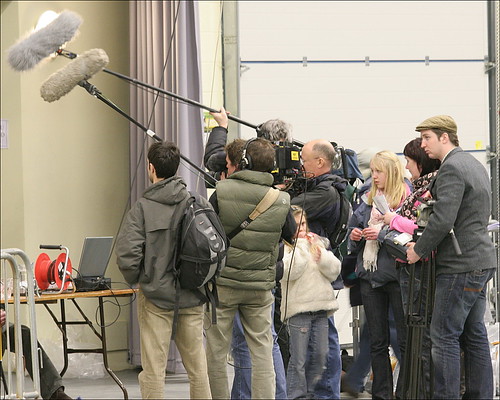
Congratulations. With your new Promotion comes the extra responsibility of being your company spokesperson. Are you the right person for this job?
The transitioning economy brought many of these changes to the workforce in recent months and created a need for many companies to look for the perfect candidate to be the new company mouth-piece. In some cases, companies who were once fully staffed with Public Relations and Communications departments are now looking within to find replacements to these positions after corporate restructuring and downsizing. So, who is the right representative for your company?
At quick glance, you can easily discover those who love their new position and are engaged with other staff and departments, but they are not necessarily the perfect candidate. Surely there must be someone that has a pleasant speaking voice and presents well in the public. Perhaps the person that is best suited in the role as company 'spokesperson' is (in fact) you.
Who is best qualified to be a spokesperson at your company:
1) Someone who is keenly aware of your company's operations or the department they represent.
2) A person who speaks confidently and is respected be their peers for their communication skills.
3) An individual who remains calm during crisis and will most likely deliver your key message to the media under pressure.
4) The multi-tasker. I call this person 'the one who knows just enough about what is going on to be dangerous'. Yes, this is similar to point number 1 above.
5) Someone with a flexible schedule. As a spokesperson, you may have to make presentations to media or shareholders at times that are not convenient to your regular schedule. Being available during 'off-hours' goes a long way in demonstrating and improving your company's customer service.
Take a look around your office. Take stock of your surroundings and the talented staff you have working with you. I am sure you will find the right person for the job as your new spokesperson.
-Darren
Join my email list to receive other helpful tips and effective solutions for media and be eligable to win a FREE 6-hour Media consultation.
Subscribe to:
Posts (Atom)