The massive oil spill in the Gulf of Mexico has quickly become an environmental disaster, one that appears to have caught a few people sleeping on the job.
While Government Officials continue to point fingers, more have become extremely critical of the slow reaction and response from British Petroleum, the operator of the oil rig. Almost two weeks after an explosion sunk the off-shore oil platform, BP is now taking responsibility and beginning the process of damage control.
Has your company been given the proper training in crisis management if it happened tomorrow?
There are three basic rules to remember when controlling a crisis situation.
S: state the obvious and admit to the mistake or crisis
O: offer support and assistance to victims
S: signal the steps your company is taking to correct the mistake
As important for you to understand how to react and respond in a crisis, it is also critical for all staff members to do the same. Who is your company spokesperson?
Only the company spokesperson should be permitted to release information to the media - that means an immediate control of all messages your staff members are broadcasting to the world via social media.
Immediate and responsive actions are vital in times of crisis as they can turn a potentially damaging situation into an ability to demonstrate leadership and strength within your organization.
A few days of Crisis Management training could save weeks, months or years of embarrassment and shame for your company.
-Darren
Sign up to my FREE email newsletter for more helpful tips and tricks for effective message control through the media.

Showing posts with label communications. Show all posts
Showing posts with label communications. Show all posts
Wednesday, May 5, 2010


Wednesday, April 28, 2010
Say What You Mean To Say

Have you ever sent an email or said something that was followed by the comment "what do you mean"?
It happens to the best of us.
Messages can be deciphered into many different points. What is lost in an email or text message is tone and direction which is why I am a fan of picking up the phone and talking directly with the person I am trying to glean information from, or to pass along important information.
The key for successful communications is clear direction and core message development.
Here is another example.
Today is April 28 and my home city of Calgary Alberta is bracing for heavy rain and snow (yes I said snow) for the next 48 hours.
What did you hear in that message?
Did you hear that it's going to be cold, wet and miserable in Calgary for the next two days?
Or, did you hear that Calgary is finally going to get some much needed spring moisture?
Effective message delivery to the Media is just as important.
Before broadcasting a message through all forms of media, start with a clear direction (objective) of what you are trying to accomplish. If you are unsure of your key message, you are not ready for your moment in the spotlight.
Are we clear?
-Darren
Wednesday, April 7, 2010
How To Cut Through The Noise

Let me guess; one of your earliest childhood memories was learning the letters of the alphabet. Since then you have lived your life confident in the knowledge that "I" comes before "U" in the alphabet. Guess what - you are WRONG.
Before you write a letter to your Grade school teachers or to the Sesame Street gang, let me explain.
For years, marketing and advertising campaigns were designed around the values and experience of the business to demonstrate the products or services being offered. Essentially, consumers were told what was good for them, and for quite some time we believed them. Call this the "I" method of communication.
Then a number of marketing and advertising agencies began to shift the focus of attention towards the consumers to demonstrate how each product or services would impact the lives of the consumer. Call this the "U" method of communication.
Today more than ever, you need to explore how to put your consumers needs ahead of your own.
Think for a moment how many messages you sift through and prioritize each day with email, text messaging, telephone calls, newspaper columns, magazine articles, blog posts, TV news, radio commentary, billboard advertising on buildings, buses and street benches, website click throughs, social media (Facebook and Twitter, etc), meetings, letters, fliers stuffed under your windshield wiper and even bathroom stall advertising. Yes, there are so many ways to broadcast your message. Now, quickly think about how many of those messages do you remember at this moment. Which messages did you respond to and which messages did you discard?
How do you cut through the noise?
As a Media Coach and Consultant offering effective solutions for message creation, delivery and engagement, I am constantly being asked to create communication links (dialogue) between clients and business. Effective messaging, either with media releases, marketing, advertising, even email and blog posts, should focus on the impact of your consumer. Answer their questions: "What's in it for me?", and "How will this effect my heart, health or wallet?".
Start with re-arranging your business priorities by putting the needs of your clients and consumers ahead of your own. In other words, re-arrange the alphabet and put "U" ahead of "I".
-Darren
Did you find this useful? Leave your comments below.
For more tips and tricks for effective communication through the media, sign up to receive my FREE email Newsletter.
Tuesday, March 23, 2010
Social Media; The Next Addiction
For Smokers, there is the 'patch' that is supposed to help you curb your craving for a cigarette.
Soon there may come a day when Pharmaceutical companies release the Facebook or Social Media patch for those of use hooked on these sites.
How often do you check Facebook, or Twitter, or Linked In?
Once a day? Several times a day? All the time?
From eMarketer.com, Social Media sites are addicting - so much so that a large percentage of users (of social media) check their accounts when they wake during the night and more have to start their day with a check of their social media accounts. So much for having a healthy breakfast.

This report from eMarketer.com also shows that the majority of social media users can go the full day with only checking their account once. That puts me in the minority as I crave Facebook, Twitter and other social media sites as often as a dozen times a day.
Hi, my name is Darren, and I am addicted to Social Media.
Glad to know I am not the only one.
-Darren
Sign up for my FREE email Newsletter with tips and tricks for effective communications through the media.
Soon there may come a day when Pharmaceutical companies release the Facebook or Social Media patch for those of use hooked on these sites.
How often do you check Facebook, or Twitter, or Linked In?
Once a day? Several times a day? All the time?
From eMarketer.com, Social Media sites are addicting - so much so that a large percentage of users (of social media) check their accounts when they wake during the night and more have to start their day with a check of their social media accounts. So much for having a healthy breakfast.

This report from eMarketer.com also shows that the majority of social media users can go the full day with only checking their account once. That puts me in the minority as I crave Facebook, Twitter and other social media sites as often as a dozen times a day.
Hi, my name is Darren, and I am addicted to Social Media.
Glad to know I am not the only one.
-Darren
Sign up for my FREE email Newsletter with tips and tricks for effective communications through the media.
Monday, March 22, 2010
Effective Communication In Harmony With Your Favorite Song; It Engages You
What is your favorite song? Why is that your favorite song? Most likely, your favorite song is one that captured a moment in your life that you continue to relate to today. A great songwriter has the ability to craft lyrics that are consumed by the masses much the same way great communicators are able to win over the public and their consumers will well crafted presentations.

(photo courtesy Canadian Music Week)
Recently, I was fortunate to attend a Songwriting Showcase in Toronto held in conjunction with Canadian Music Week. On this panel were legendary songwriters Dan Hill, Don Schlitz, Dave Stewart and Paul Williams.
Each of them have written songs you are very familiar with - songs that still connect with you today.
Dan Hill wrote "Sometimes When We Touch" when he was 19 years old to try to win back the heart of a girl. That is just one of many big songs he has written for other performers.
Don Schlitz wrote a song when he was working as a computer programmer at the age of 22 living in Nashville that took 6 weeks to craft until he had it finished. Ever hear of "The Gambler"? That was just one of over 50 Top-10 hits written by Don Schlitz.
Dave Stewart has written many incredible songs like "Sweet Dreams are Made Of This" for the Eurythmics, and other huge hits for Ringo Starr, Tom Petty and Gwen Stefani.
Paul Williams' repertoire includes many of the Carpenters hits like "We've Only Just Begun" and "Rainy Days and Mondays", Barbra Streisand's "Evergreen", "The Rainbow Connection" from the Muppet Movie and even the theme from "The Love Boat".
These songwriters are more than just master word-smiths. They are master communicators.
But do not think that writing a hit song and communicating with your target audience can be completed overnight. The process takes courage, creativity, insight and more importantly, it takes time.
Effective communication starts with a well thought out plan and is always focused on impacting and engaging your target audience - your clients or customers.
Ready to write a hit song today?
-Darren
Sign up to receive my free e-mail Newsletter filled with more tips and tricks for effective communication through the media.

(photo courtesy Canadian Music Week)
Recently, I was fortunate to attend a Songwriting Showcase in Toronto held in conjunction with Canadian Music Week. On this panel were legendary songwriters Dan Hill, Don Schlitz, Dave Stewart and Paul Williams.
Each of them have written songs you are very familiar with - songs that still connect with you today.
Dan Hill wrote "Sometimes When We Touch" when he was 19 years old to try to win back the heart of a girl. That is just one of many big songs he has written for other performers.
Don Schlitz wrote a song when he was working as a computer programmer at the age of 22 living in Nashville that took 6 weeks to craft until he had it finished. Ever hear of "The Gambler"? That was just one of over 50 Top-10 hits written by Don Schlitz.
Dave Stewart has written many incredible songs like "Sweet Dreams are Made Of This" for the Eurythmics, and other huge hits for Ringo Starr, Tom Petty and Gwen Stefani.
Paul Williams' repertoire includes many of the Carpenters hits like "We've Only Just Begun" and "Rainy Days and Mondays", Barbra Streisand's "Evergreen", "The Rainbow Connection" from the Muppet Movie and even the theme from "The Love Boat".
These songwriters are more than just master word-smiths. They are master communicators.
But do not think that writing a hit song and communicating with your target audience can be completed overnight. The process takes courage, creativity, insight and more importantly, it takes time.
Effective communication starts with a well thought out plan and is always focused on impacting and engaging your target audience - your clients or customers.
Ready to write a hit song today?
-Darren
Sign up to receive my free e-mail Newsletter filled with more tips and tricks for effective communication through the media.
Monday, March 1, 2010
Make Each Moment Count
Whether it was the grueling 50 kilometer cross country ski event, or a short track speed skating event, each athlete that competed at the 2010 Winter Olympic Games in Vancouver had to make each moment count.
The Olympics are very much like communicating to your clients or customers. You hire and train staff who are capable of delivering under pressures such as deadlines, split second decisions and risk of failure.
Are your staff worthy of standing on the medal platform, or are they better keeping the bench warm?
When communicating to your clients and customers through the media, you have one chance to make a lasting impression. What you say and the manner in which you say it goes a long way in earning the trust and respect from a prospective customer.
Each time you use media, regardless if it is on-line, radio, television or newspaper, make each moment count. Your team (company) is counting on you to put in your best performance every time.
-Darren
Speak Media Consulting
Want more free media tips and tricks? Sign up to receive my free newsletter.
The Olympics are very much like communicating to your clients or customers. You hire and train staff who are capable of delivering under pressures such as deadlines, split second decisions and risk of failure.
Are your staff worthy of standing on the medal platform, or are they better keeping the bench warm?
When communicating to your clients and customers through the media, you have one chance to make a lasting impression. What you say and the manner in which you say it goes a long way in earning the trust and respect from a prospective customer.
Each time you use media, regardless if it is on-line, radio, television or newspaper, make each moment count. Your team (company) is counting on you to put in your best performance every time.
-Darren
Speak Media Consulting
Want more free media tips and tricks? Sign up to receive my free newsletter.
Thursday, January 21, 2010
Social Media: The Mothership for Local content
For many years, I used to prepare my local radio show using information I found in newspapers, television shows I watched and stories I learned from my friends. This was many years before the home computer and the world wide web. For many years, the traditional media employed similar methods to locate and source content for their respective operations.
In case you have not noticed, we are not in Kansas anymore!
You do not have to wait for content to be delivered to you via radio, television or newspaper. We have rapidly become reliant on the high speed access to content at our fingertips.
You want pizza delivery, order online from their website.
You want to find a review from last nights concert that was not in the newspaper, check to see what your friends are saying on Facebook.
You want to find if your friend arrived home safely, send them a text message.
Social Media is the 'mothership' for local content. Social media has empowered each and every user with the ability to communicate and broadcast a message without time or editorial restrictions like traditional media. I agree there is a lot of content being published on social media that I constitute as rubbish, but one persons trash is another persons gold. And just like traditional media, we have the ability to flip the page or change the channel if we find something we are not interested in.
Am I suggesting that the new on-line Social media will replace all current forms of media and make radio, television and newspaper extinct? No.
The new on-line media is creating interesting new challenges for traditional media but they, too, are faced with a unique opportunity for rebirth and continued life.
Imagine; your 'daily newspaper' delivered fresh to your desktop or smart phone but instead of just one paper, you are able to view many real time updates from news organizations you have preselected. This is a reality.
Imagine; your favorite radio station not only plays what you want but creates on-line engagement by responding and reacting to topics being published by their fans (like you) on Facebook or Twitter. This is a reality.
Imagine; you can contribute a story to the television news by recording a video on your smart phone from a local community event and emailing it to the television station. This is a reality.
Traditional media outlets are looking for new ways to find engagement with their audience. Might I suggest taking a serious look at the impact of social media. There appears to be a lot of engaged people around the world...all broadcasting and rebroadcasting local content each and every day.
Social Media = two words
Social - to create two-way communication
Media - the ability to broadcast to the masses
-Darren
Sign up to my free email newsletter for a chance to win a FREE 6-hour Media consultation. Promotion ends January 31, 2010.
In case you have not noticed, we are not in Kansas anymore!
You do not have to wait for content to be delivered to you via radio, television or newspaper. We have rapidly become reliant on the high speed access to content at our fingertips.
You want pizza delivery, order online from their website.
You want to find a review from last nights concert that was not in the newspaper, check to see what your friends are saying on Facebook.
You want to find if your friend arrived home safely, send them a text message.
Social Media is the 'mothership' for local content. Social media has empowered each and every user with the ability to communicate and broadcast a message without time or editorial restrictions like traditional media. I agree there is a lot of content being published on social media that I constitute as rubbish, but one persons trash is another persons gold. And just like traditional media, we have the ability to flip the page or change the channel if we find something we are not interested in.
Am I suggesting that the new on-line Social media will replace all current forms of media and make radio, television and newspaper extinct? No.
The new on-line media is creating interesting new challenges for traditional media but they, too, are faced with a unique opportunity for rebirth and continued life.
Imagine; your 'daily newspaper' delivered fresh to your desktop or smart phone but instead of just one paper, you are able to view many real time updates from news organizations you have preselected. This is a reality.
Imagine; your favorite radio station not only plays what you want but creates on-line engagement by responding and reacting to topics being published by their fans (like you) on Facebook or Twitter. This is a reality.
Imagine; you can contribute a story to the television news by recording a video on your smart phone from a local community event and emailing it to the television station. This is a reality.
Traditional media outlets are looking for new ways to find engagement with their audience. Might I suggest taking a serious look at the impact of social media. There appears to be a lot of engaged people around the world...all broadcasting and rebroadcasting local content each and every day.
Social Media = two words
Social - to create two-way communication
Media - the ability to broadcast to the masses
-Darren
Sign up to my free email newsletter for a chance to win a FREE 6-hour Media consultation. Promotion ends January 31, 2010.
Wednesday, January 20, 2010
Selecting the most effective spokesperson
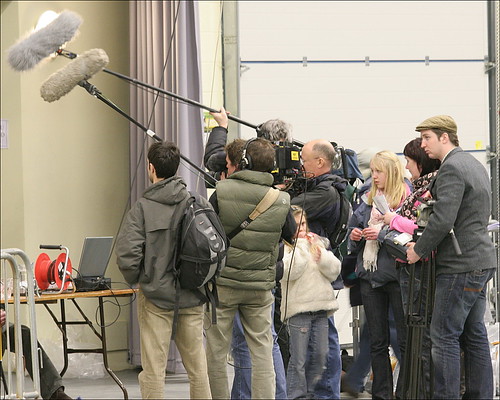
Congratulations. With your new Promotion comes the extra responsibility of being your company spokesperson. Are you the right person for this job?
The transitioning economy brought many of these changes to the workforce in recent months and created a need for many companies to look for the perfect candidate to be the new company mouth-piece. In some cases, companies who were once fully staffed with Public Relations and Communications departments are now looking within to find replacements to these positions after corporate restructuring and downsizing. So, who is the right representative for your company?
At quick glance, you can easily discover those who love their new position and are engaged with other staff and departments, but they are not necessarily the perfect candidate. Surely there must be someone that has a pleasant speaking voice and presents well in the public. Perhaps the person that is best suited in the role as company 'spokesperson' is (in fact) you.
Who is best qualified to be a spokesperson at your company:
1) Someone who is keenly aware of your company's operations or the department they represent.
2) A person who speaks confidently and is respected be their peers for their communication skills.
3) An individual who remains calm during crisis and will most likely deliver your key message to the media under pressure.
4) The multi-tasker. I call this person 'the one who knows just enough about what is going on to be dangerous'. Yes, this is similar to point number 1 above.
5) Someone with a flexible schedule. As a spokesperson, you may have to make presentations to media or shareholders at times that are not convenient to your regular schedule. Being available during 'off-hours' goes a long way in demonstrating and improving your company's customer service.
Take a look around your office. Take stock of your surroundings and the talented staff you have working with you. I am sure you will find the right person for the job as your new spokesperson.
-Darren
Join my email list to receive other helpful tips and effective solutions for media and be eligable to win a FREE 6-hour Media consultation.
Wednesday, December 2, 2009
Are you engaging or on autopilot?
Greg Johnson is a Radio Programmer in Fort McMurray, Alberta. I have had the pleasure of working with Greg and have experienced his dedication and witnessed his creative mind. While this article was originally written for the benefit of Radio broadcasters, it has many applications for just about every employee of every industry, big or small.
Here is his article.
As I flew home the other day from Edmonton, Westjet reinforced some of the fundamentals of radio that have been preached since Marconi.
The BASICS.
The flight attendant came over the intercom - blasé and monotone (think Eeyore) - and delivered the spiel. You know: how to do up your seatbelt, how to suck oxygen in case of an emergency. As an attendant she's delivered that spiel 1001 times this week alone. But wait. What if I had been flying for the first time? I would have never heard the spiel before, and the information would be very informative and compelling. Plus, there were some new jokes that I hadn't heard before (something about turning off your electronic devices: cell phones, lap tops, George Foreman Grills). But, with her less than upbeat delivery, she glossed over all her jokes and the humour fell flat.
If you sound bored - you ARE boring. When they do the safety spiel, we think "blah blah blah". Listen to how it's delivered. There is no emotion. No attempt to make it sparkle ... therefore I'm making no attempt to listen. Think there's no way to make the safety spiel interesting?
What are you doing to make the basics leap through the radio? Make them count. Traffic & Weather. Time & Temp. Station ID and your Name. You'll deliver it endless times throughout your show. Are you blasting through them or giving the Basics their due? Someone has just gotten into their vehicle and is hearing it for the first time. Make it sound like you're saying it for the first time. That Rappin' Flight Attendant clip? Might have been the first time you've seen it. Betcha he's been doing that for 3 flights / day for months. But he delivered it like the first time.
Quite honestly, no one is worth listening to if they don't sound like they're having fun.
Don't LIE.
The weather was awful. Snow, slush & wind. I expected delays. All the Departure boards projected "On Time". The Captain made no mention of delays. When it came time to de-ice the plane, the Captain came over the intercom and said, "This should only take 10 minutes". Problem is, it didn't. It took 40 minutes. BIG DIFFERENCE. And not only did he lie about the time frame, there was no update on what the hold up was until after we were making our way to the runway.
If you're going to do something on the show, then DO IT. You are making a promise to the listener. Saying "a couple of minutes" or "in a bit" is not only vague, but has different meanings to different people. "@ 7:40" or "in 10 minutes" is concrete.
The other point is immediacy. The pilot is my information source. As passengers we were visibly agitated, and the pilot made no attempt to update us on our status. In radio, we are the eyes and ears - and we have the ability to provide up-to-the-second information. Don't ignore the needs of our "passengers". "Air Canada" is only a couple dial positions away.
Sometimes We Need to Be SERIOUS.
The Pilots introduced themselves as "Neil & Matt at the front of the plane". Call me old fashioned, but I'd at least like to know that it's "Captain Neil and Co-Pilot Matt in the cockpit". "Hey everyone it's Neil & Matt" … they sound like the new design team on HGTV. It irked me that the pilot was joking around. Was he going to do some rolls and loops in the sky?
Sometimes we need to be serious, human and sincere. Amber Alert … stick to the script. River Break 2009 … flooding is not funny. Ask Manitoba. Know your role in certain situations. People will come to us for serious information and a quick joy buzzer gag could kill all credibility.
If you went to see a new doctor and he came into the examination room and said, "Hey there -- I'm Rick!" … I doubt you'd even stick around to hear the glove snap.
Don't Be THAT Guy Who Reclines His Seat.
I'm sure I could find some radio analogy here … but the truth is planes are packing us in and we ain't getting any thinner. If you recline, you're a prick. I only wish I had my 2 year old with me to kick your seat for the entire flight.
Greg Johnson
Program Director
COUNTRY 93.3 / ROCK 97.9
Fort McMurray, AB
w. 780.743.2246
f. 780.791.7250
greg.johnson@rci.rogers.com
Thank you Greg.
-Darren
Here is his article.
As I flew home the other day from Edmonton, Westjet reinforced some of the fundamentals of radio that have been preached since Marconi.
The BASICS.
The flight attendant came over the intercom - blasé and monotone (think Eeyore) - and delivered the spiel. You know: how to do up your seatbelt, how to suck oxygen in case of an emergency. As an attendant she's delivered that spiel 1001 times this week alone. But wait. What if I had been flying for the first time? I would have never heard the spiel before, and the information would be very informative and compelling. Plus, there were some new jokes that I hadn't heard before (something about turning off your electronic devices: cell phones, lap tops, George Foreman Grills). But, with her less than upbeat delivery, she glossed over all her jokes and the humour fell flat.
If you sound bored - you ARE boring. When they do the safety spiel, we think "blah blah blah". Listen to how it's delivered. There is no emotion. No attempt to make it sparkle ... therefore I'm making no attempt to listen. Think there's no way to make the safety spiel interesting?
What are you doing to make the basics leap through the radio? Make them count. Traffic & Weather. Time & Temp. Station ID and your Name. You'll deliver it endless times throughout your show. Are you blasting through them or giving the Basics their due? Someone has just gotten into their vehicle and is hearing it for the first time. Make it sound like you're saying it for the first time. That Rappin' Flight Attendant clip? Might have been the first time you've seen it. Betcha he's been doing that for 3 flights / day for months. But he delivered it like the first time.
Quite honestly, no one is worth listening to if they don't sound like they're having fun.
Don't LIE.
The weather was awful. Snow, slush & wind. I expected delays. All the Departure boards projected "On Time". The Captain made no mention of delays. When it came time to de-ice the plane, the Captain came over the intercom and said, "This should only take 10 minutes". Problem is, it didn't. It took 40 minutes. BIG DIFFERENCE. And not only did he lie about the time frame, there was no update on what the hold up was until after we were making our way to the runway.
If you're going to do something on the show, then DO IT. You are making a promise to the listener. Saying "a couple of minutes" or "in a bit" is not only vague, but has different meanings to different people. "@ 7:40" or "in 10 minutes" is concrete.
The other point is immediacy. The pilot is my information source. As passengers we were visibly agitated, and the pilot made no attempt to update us on our status. In radio, we are the eyes and ears - and we have the ability to provide up-to-the-second information. Don't ignore the needs of our "passengers". "Air Canada" is only a couple dial positions away.
Sometimes We Need to Be SERIOUS.
The Pilots introduced themselves as "Neil & Matt at the front of the plane". Call me old fashioned, but I'd at least like to know that it's "Captain Neil and Co-Pilot Matt in the cockpit". "Hey everyone it's Neil & Matt" … they sound like the new design team on HGTV. It irked me that the pilot was joking around. Was he going to do some rolls and loops in the sky?
Sometimes we need to be serious, human and sincere. Amber Alert … stick to the script. River Break 2009 … flooding is not funny. Ask Manitoba. Know your role in certain situations. People will come to us for serious information and a quick joy buzzer gag could kill all credibility.
If you went to see a new doctor and he came into the examination room and said, "Hey there -- I'm Rick!" … I doubt you'd even stick around to hear the glove snap.
Don't Be THAT Guy Who Reclines His Seat.
I'm sure I could find some radio analogy here … but the truth is planes are packing us in and we ain't getting any thinner. If you recline, you're a prick. I only wish I had my 2 year old with me to kick your seat for the entire flight.
Greg Johnson
Program Director
COUNTRY 93.3 / ROCK 97.9
Fort McMurray, AB
w. 780.743.2246
f. 780.791.7250
greg.johnson@rci.rogers.com
Thank you Greg.
-Darren
Wednesday, November 25, 2009
H1N1 Pandemic; Fears before Facts – what you needed to know
I am not a Doctor. I am not employed by any Medical company.
But because of the fears of the H1N1 ‘Swing Flu’ pandemic, I have had to do a lot of my own research to ensure that I remain healthy. And I’m sure you and many of your friends and families have done the same.
Why? Because the people who we elected to ensure the health and safety of the citizens of our country failed to do their job. They failed to control the message, they failed to provide reliable information on the flu strain, and they failed to inform me (the public) on the safety or effects of getting the flu shot. They simply failed.
Where could this have been corrected? Let’s start at the beginning.
The WHO (World Health Organization) has been talking about a Global Pandemic for years, but it was about 18 months ago when their tone changed. No longer were they talking about ‘if’ there would be a concern but ‘when’ there this would be a concern. And what were our Governments doing to prepare for this Global infection? From what we’re seeing now in many parts of Canada – nothing.
Surely someone started to prepare an Emergency Crisis plan. Surely, emergency meetings were called to discuss a crisis management strategy. What are we going to say? How are we going to get the messages out? How are we going to ensure that one message is being delivered at all times? How are we going to ensure the public will not panic? Was this done? Perhaps to some degree, but not to the extent that I needed to be.
As a Media Coach, my message to my clients is simple; communicate a message and do not alter from that message. Use every method possible to ensure your message is being delivered accurately and correctly. How do you think they, the people responsible for ensuring the health and safety of millions of Canadians performed? Failure.
From the moment the H1N1 ‘Swine Flu’ became a Pandemic concern, they needed to broadcast timely and consistent messages to everyone, everywhere. We’re talking about the lives of Millions of innocent people. Many of these people are also very web savvy and, like me, have had to look to the net to find useful, up-to-date information because it is not being provided by the traditional Media outlets. Think about it.
A newspaper only publishes daily in large markets – weekly in smaller markets.
TV stations only air Newscasts in the Morning, noon hour, supper hour and late evening
Radio stations run short news casts during the morning shows and very few through the rest of the day.
The internet provides content that is refreshed every second.
So how can you prevent panic when you’re only providing minimal updates to the conventional media when we, as citizens, want updates NOW?
You have to be willing to think outside the box – re-invent the box if you have to, but you can do so while still controlling the main message. First of all, you have to build a team of people that understand the importance of message development and message delivery. Once you get a plan in place, you can then begin broadcasting your message to the ‘web’ of Media that will turn to you for comment. Remember, if you don’t provide the information the public wants when they want it, they will find anyone standing on a street corner to give them the information they are looking for at that moment.
So before Crisis strikes your organization, are you prepared?
But because of the fears of the H1N1 ‘Swing Flu’ pandemic, I have had to do a lot of my own research to ensure that I remain healthy. And I’m sure you and many of your friends and families have done the same.
Why? Because the people who we elected to ensure the health and safety of the citizens of our country failed to do their job. They failed to control the message, they failed to provide reliable information on the flu strain, and they failed to inform me (the public) on the safety or effects of getting the flu shot. They simply failed.
Where could this have been corrected? Let’s start at the beginning.
The WHO (World Health Organization) has been talking about a Global Pandemic for years, but it was about 18 months ago when their tone changed. No longer were they talking about ‘if’ there would be a concern but ‘when’ there this would be a concern. And what were our Governments doing to prepare for this Global infection? From what we’re seeing now in many parts of Canada – nothing.
Surely someone started to prepare an Emergency Crisis plan. Surely, emergency meetings were called to discuss a crisis management strategy. What are we going to say? How are we going to get the messages out? How are we going to ensure that one message is being delivered at all times? How are we going to ensure the public will not panic? Was this done? Perhaps to some degree, but not to the extent that I needed to be.
As a Media Coach, my message to my clients is simple; communicate a message and do not alter from that message. Use every method possible to ensure your message is being delivered accurately and correctly. How do you think they, the people responsible for ensuring the health and safety of millions of Canadians performed? Failure.
From the moment the H1N1 ‘Swine Flu’ became a Pandemic concern, they needed to broadcast timely and consistent messages to everyone, everywhere. We’re talking about the lives of Millions of innocent people. Many of these people are also very web savvy and, like me, have had to look to the net to find useful, up-to-date information because it is not being provided by the traditional Media outlets. Think about it.
A newspaper only publishes daily in large markets – weekly in smaller markets.
TV stations only air Newscasts in the Morning, noon hour, supper hour and late evening
Radio stations run short news casts during the morning shows and very few through the rest of the day.
The internet provides content that is refreshed every second.
So how can you prevent panic when you’re only providing minimal updates to the conventional media when we, as citizens, want updates NOW?
You have to be willing to think outside the box – re-invent the box if you have to, but you can do so while still controlling the main message. First of all, you have to build a team of people that understand the importance of message development and message delivery. Once you get a plan in place, you can then begin broadcasting your message to the ‘web’ of Media that will turn to you for comment. Remember, if you don’t provide the information the public wants when they want it, they will find anyone standing on a street corner to give them the information they are looking for at that moment.
So before Crisis strikes your organization, are you prepared?
Marketing and Promotion on a shoe-string budget
How can you create a successful event with very little budget?
I recently attended a fundraising event in my small hometown in central Saskatchewan. For a once thriving community that supported the local farming and ranching families has been reduced to only about 100 residents. The grain elevators are gone, the skating rink has disappeared and the school I once attended is now the community grocery store. But one thing that has not changed is the small town spirit of "community".
While I have always stayed in contact with my family and friends in this small community, I witnessed an event that would make Marketing, Promotions and Public Relations specialists proud. The success of this event was not the result of a major advertising campaign. Not at all. In fact this sold-out event was the result of 10% advertising and 90% old-school social marketing; the telephone.
What I have failed to mention so far is the fact that in this quiet town of approximately 100 residents, many were engaged by the fundraising initiative and picked up the phone to tell their friends and family. Many of those contacted also talked with other friends and spread the word to a more far reaching group of engaged family and friends. After the home cooked meal, the speaches, video presentations and music, more than 200 people attended this small town fundraiser - a sell-out event. Money raised will be provided to purchase a piano and other musical instruments for the residents of a local Seniors Lodge.
Why was this a success? Good old fashioned two-way communication...the telephone.
When planning your next event or promotion, take a page from my friends back home:
-the event must have a worthy cause,
-the event must have a solid base of supporters who believe in the event,
-the event can be 'advertised' through conversation and networking,
-follow up with guests prior to the event to remind them the importance of their attendance,
-do not give up the cause.
In memory of my Uncle, Don Lynch.
"Any day that you don't laugh is a wasted day."
I recently attended a fundraising event in my small hometown in central Saskatchewan. For a once thriving community that supported the local farming and ranching families has been reduced to only about 100 residents. The grain elevators are gone, the skating rink has disappeared and the school I once attended is now the community grocery store. But one thing that has not changed is the small town spirit of "community".
While I have always stayed in contact with my family and friends in this small community, I witnessed an event that would make Marketing, Promotions and Public Relations specialists proud. The success of this event was not the result of a major advertising campaign. Not at all. In fact this sold-out event was the result of 10% advertising and 90% old-school social marketing; the telephone.
What I have failed to mention so far is the fact that in this quiet town of approximately 100 residents, many were engaged by the fundraising initiative and picked up the phone to tell their friends and family. Many of those contacted also talked with other friends and spread the word to a more far reaching group of engaged family and friends. After the home cooked meal, the speaches, video presentations and music, more than 200 people attended this small town fundraiser - a sell-out event. Money raised will be provided to purchase a piano and other musical instruments for the residents of a local Seniors Lodge.
Why was this a success? Good old fashioned two-way communication...the telephone.
When planning your next event or promotion, take a page from my friends back home:
-the event must have a worthy cause,
-the event must have a solid base of supporters who believe in the event,
-the event can be 'advertised' through conversation and networking,
-follow up with guests prior to the event to remind them the importance of their attendance,
-do not give up the cause.
In memory of my Uncle, Don Lynch.
"Any day that you don't laugh is a wasted day."
Subscribe to:
Posts (Atom)